Home / Sustainable architecture
Sustainable architecture

Sustainable Architecture: The Greenest Building Is the One Already Built

Restoring, reusing and updating what is already built is one of the most sustainable decisions a project can make. How I work with it as an architect in Buenos Aires, and how it relates to LEED.

The starting point

Demolition wastes the carbon a building already holds

An existing building already carries the emissions of making, transporting and installing its materials: its embodied carbon. Demolishing it and building new wastes that carbon, forces the same emissions to be produced again and adds tons of debris. The life-cycle analyses available indicate that, in most cases, rehabilitating has a lower environmental impact than demolishing and rebuilding. It is not always so: it depends on the condition of the building, its energy performance and the program.

That is why my first question on an existing building is not what can be demolished, but what is worth keeping. On the projects I led in San Telmo, what was there was worth keeping: walls, floors, joinery and stairs more than a hundred years old, well built, that needed restoration and new services, not replacement.

LEED and reuse

What this has to do with LEED

LEED is the best-known certification system for sustainable buildings, created by the U.S. Green Building Council. It evaluates several aspects of a building: location, water use, energy, materials and indoor environmental quality.

One of its categories, Materials and Resources, rewards reducing the building’s life-cycle impact. In versions 4 and 4.1 it recognizes the reuse of historic buildings and of existing structure and materials, as opposed to demolishing and building new. Keeping what is already built is therefore one of the ways a project earns sustainability credit, within LEED as well.

An important clarification: this page does not offer LEED certification and does not guarantee that a project can obtain it. Certification depends on each project and is managed by an accredited professional on the team. What I contribute is the architecture side: diagnosing the existing building, deciding what is kept and documenting it.

On site

Sustainability criteria in a renovation

I am a licensed architect with more than twenty years of built work in Buenos Aires. These are the criteria I work with when the project is an existing building:

  • Diagnose before demolishing. Survey the building and its condition to decide what is kept, what is repaired and what is replaced.
  • Keep and restore the original pieces. Floors, openings, shutters and stairs are restored instead of replaced, and the plaster ceilings are rebuilt with their moldings. In the Humberto Primo PH every original piece was saved, and in the chorizo house eight sets of doors were reproduced from the only original that survived.
  • Demolish selectively. Remove only what cannot or should not be kept, like the non-compliant additions at Humberto Primo, which were partially demolished.
  • House new services inside what exists. Ducted air conditioning was solved using the space between the ceilings and the roof, without taking up usable area.
  • Do not lose usable area. The solution to the code violation at Humberto Primo, with an angle that makes the new construction invisible from the street, did not cost a single square meter of covered area.
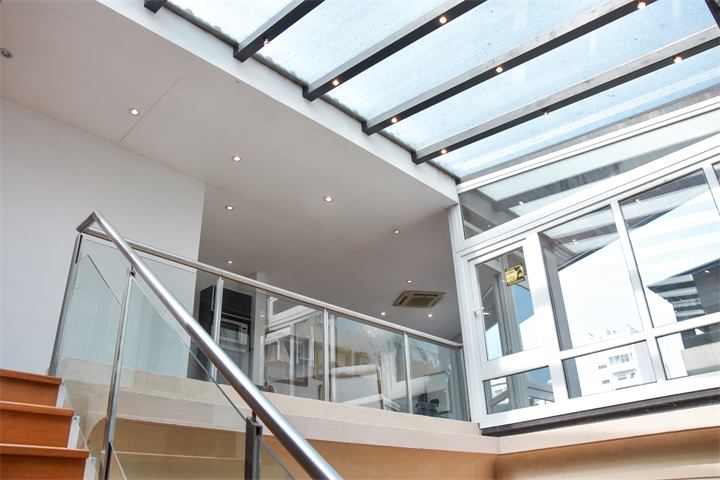
Restored chorizo house in San Telmo

Casa Chorizo

Restoration of a late-19th-century house in San Telmo, with new construction, told in ten milestones.

Read the case →
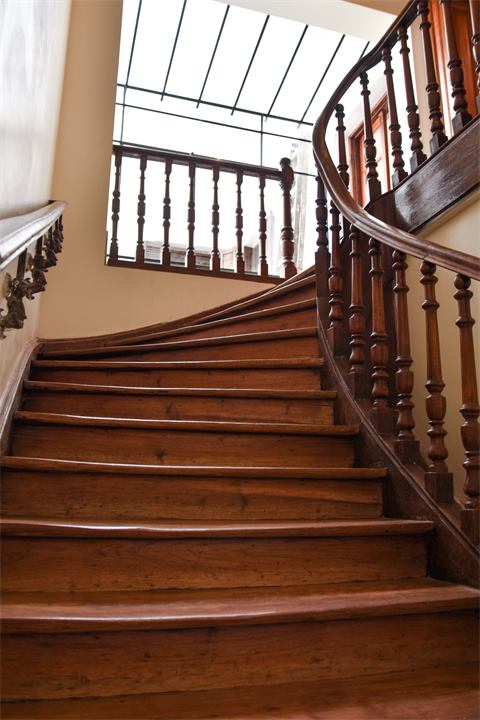
Restored timber stair in the Humberto Primo PH

PH Humberto Primo

Restoration of a PH apartment more than a hundred years old, in thirteen milestones of a staged project.

Read the case →
BIM

The model as a tool to decide what is kept

I model the existing building in Revit and organize the renovation by phases (existing, demolition and new work) in a single model. That makes it possible to measure, phase by phase, how much is kept, how much is removed and how much is added, and to compare alternatives before deciding.

Calculating the carbon footprint or the credits of a certification belongs to a specialist in the subject: the model provides the quantities by phase. The method is explained in BIM for Renovation and Existing Conditions / Scan-to-BIM.

FAQ

Sustainable architecture and building reuse

What is sustainable architecture?

Sustainable architecture aims to reduce a building's environmental impact across its whole life: materials and construction, energy and water use, the comfort of the people who use it, and maintenance. Reusing an existing building is one of the decisions that weighs most, because it avoids emitting again the carbon already embodied in the materials.

Is reusing a building always more sustainable than building new?

In most of the cases analyzed, yes, but not always: it depends on the condition of the building, its energy performance and what you want to do with it. That is why the first step is a diagnosis of the existing building, before deciding what is kept and what is replaced.

What does working with sustainability criteria mean on a renovation?

Diagnosing the building before demolishing, keeping and restoring what can be kept, demolishing selectively, housing modern services inside the existing structure, and documenting what is kept, what is removed and what is added.

How does restoration relate to LEED?

LEED is a certification system for sustainable buildings. In versions 4 and 4.1, its Materials and Resources category recognizes the reuse of historic buildings and of existing structure and materials. Keeping what is already built is therefore one of the ways a project earns sustainability points.

Do you certify LEED projects?

I do not offer LEED certification and cannot guarantee that a project will earn it. Certification depends on each project and is managed by an accredited professional on the team. My contribution is the architecture side: diagnosing the existing building, deciding what is kept and documenting it, in coordination with that professional if the project is seeking certification.

Have a building to restore or reuse?

Tell me about your project and I will reply with a proposal. I work in Buenos Aires and also remotely.

Get in touch → See projects